
Do you want to see the Great Migration? Well, so does everyone else. And everyone expects to see the river crossings that we have all seen on TV. But, as with most things in life, it isn’t quite that easy.
The Great Migration, for those of you that don’t know, is the movement of around 2 million wildebeest and zebra, across the plains of the Serengeti and Masai Mara. The animals move around in a circular pattern through the reserves, in search of better food and water. With the erratic rains and changing weather patterns, the well-worn path that the Migration takes is ever-changing. It is impossible to pin-point exactly where the migrating animals will be at any given time, but, given historical patterns, we can put you in the right area at the right time and hope for the best!
When people talk about the Migration, they generally mean the river crossings. The yearly spectacle that has 2 million animals crossing the rivers between the Serengeti in Tanzania and the Masai Mara in Kenya. Iconic scenes of great stampedes of wildebeest, thundering down the sandy banks, swimming across engorged rivers with huge crocodiles in pursuit. Not all of them make it across, leaving some very happy crocs in their wake.
Often the animals hang around the rivers for days, waiting for the perfect time to cross. Oddly enough, the animals often cross backwards and forwards for a few days, seemingly confused about where they are headed. So you could be in the right place, at the right time, but still not be lucky enough to witness a river crossing.
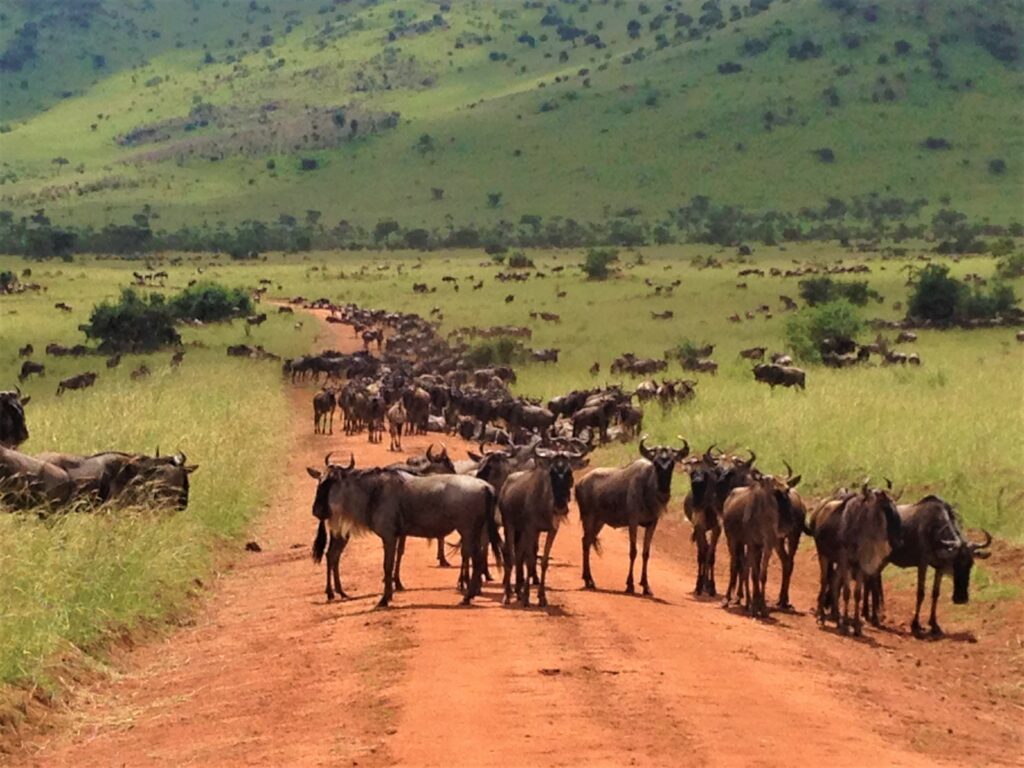
These iconic crossings only happen between the months of June and September ( The long rains and the short rains play a part, so is never something that can be exactly predicted). During the rest of the year, one can still follow the migration and see the herds, but without seeing the river crossings.
Another great spectacle is the calving seasons. This happens around February when the Migration is situated down on the plains of the Southern Serengeti. You can imagine the predator action is at its peak while the babies are small and weak. But beware, this isn’t for the faint of heart.
Here is a general breakdown of where the Migration will be at any given time:
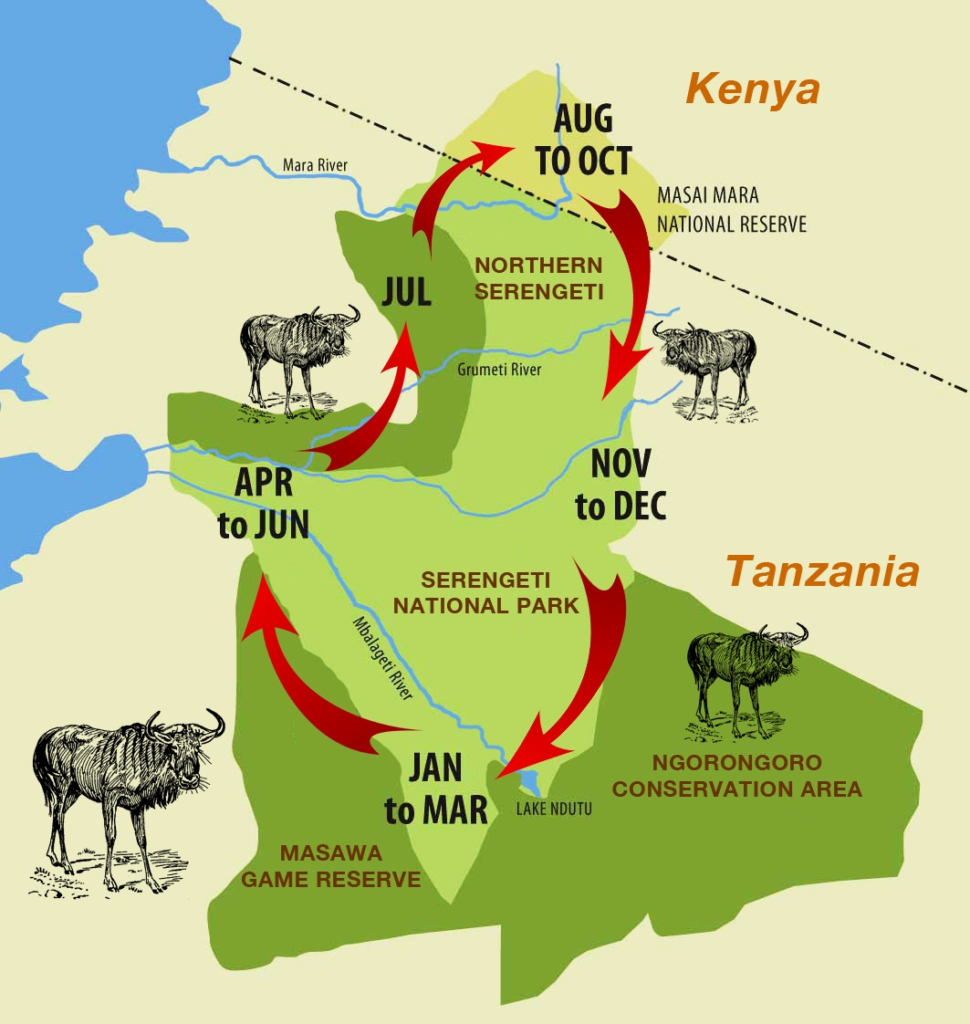
- January to March – Southern Serengeti where the herds are dispersed. Calving season.
- April to May – South Central Serengeti. Rainy season.
- June – Grumeti. River crossings of the Grumeti River can be experienced.
- July to September/October – River crossings can be observed. Migration heading to, or in, Masai Mara.
- October/November to December – Central Serengeti
No matter what time of year you are traveling, chat to us and we will make sure you are in the right area, so that you can experience the very best game viewing.